When water starts moving through a Charleston property, a vague answer is not good enough. Charleston Water Damage Restoration Service gives property owners a clearer conversation about the source, affected rooms, hidden moisture, drying, cleanup, and what should happen next.
One call can replace guesswork with a clearer plan. Tell us what happened, when it started, and which areas are affected.
Start with the sourceWhat happened and has it stopped?
Define what is wetRooms, materials, and nearby spaces.
Organize the responseRemoval, drying, cleanup, then repairs.
The short answer
Why should you call Charleston Water Damage Restoration Service?
Because a serious water problem deserves more than a rushed, generic answer. Charleston Water Damage Restoration Service helps Charleston property owners understand the source, affected rooms, water removal, moisture checks, structural drying, cleanup, and the decisions that may come before repairs. Call (843) 806-1221 and begin with a property-specific conversation.
What sets this business apart?
Choose the company that asks better questions before recommending the next step.
Charleston Water Damage Restoration Service is built around careful listening and property-specific guidance. Instead of treating every loss like the same job, the conversation begins with how the water entered, where it may have traveled, and which materials are involved.
You do not need inflated promises or confusing jargon. You need a company that can explain the problem plainly, respect the unknowns, and help separate immediate concerns from water removal, moisture checks, drying, cleanup, material decisions, and repair planning.
Service 01
Water extraction
Removing accessible water can limit continued absorption into nearby materials. The method should fit the water volume, source, access, and surfaces involved.
The source, water path, time involved, and materials affected matter more than a one-size-fits-all label.
Pipe or supply-line leak
Check where the line failed, whether the supply is off, and which floors, walls, cabinets, or rooms received water.
Appliance or fixture overflow
Look beyond the visible puddle toward flooring edges, cabinets, wall bases, and nearby rooms.
Roof or window entry
Consider the opening, the path through ceilings or walls, insulation, and materials below the first visible stain.
Storm or surface water
Prioritize safety, document the starting condition, and explain where the water entered and how far it traveled.
A simple four-part process
Make the problem easier to discuss.
1
Explain the incident
Share the source, timing, and whether water is still entering.
2
Identify affected areas
Include rooms, surfaces, wall areas, cabinets, and any space below.
3
Discuss removal and drying
Ask how the moisture path and materials may shape the response.
4
Separate the next decisions
Cleanup, material removal, and repairs are not automatically the same step.
Charleston, SC
Water Damage Restoration in Charleston, SC
Charleston properties can combine wind-driven rain, high humidity, older building materials, crawl spaces, and water entering near roofs, windows, or plumbing. A useful response starts with the actual source and follows the moisture through the affected materials.
In Charleston, the same visible stain can involve very different moisture paths. Wind-driven rain may enter around an opening, a supply-line leak may spread beneath flooring, and crawl-space moisture may affect materials from below. The useful question is not only where water appeared, but how it traveled and what it touched.
Charleston Water Damage Restoration Service is presented for property owners throughout Charleston, SC. These familiar area names help callers explain where the property is located; they are not separate offices or claimed business addresses.
Downtown Charleston
West Ashley
James Island
Daniel Island
Johns Island
Charleston Peninsula
Why this company is the better call
Demand more than a generic answer from a water-damage company.
Your property comes first
The discussion begins with the actual source, time, rooms, building materials, and safety concerns—not a canned pitch built for every caller.
The steps are explained clearly
Water removal, moisture checks, drying, cleanup, demolition decisions, and repairs are connected, but a dependable conversation does not blur them together.
Hidden moisture is taken seriously
The conversation considers flooring layers, trim, cabinets, wall cavities, insulation, and rooms below the visible water line instead of stopping at the obvious puddle.
No phony certainty
Scope and timing depend on the property. This company keeps the discussion honest about what is known, what still needs evaluation, and which questions come next.
Protect the property from the full water path
The goal is not a room that looks dry. It is a property that is ready to repair.
Water can move under flooring, wick into drywall, soak insulation, reach cabinets, and cross into adjoining rooms. Fast extraction matters, but controlled drying and moisture checks are what help prevent avoidable demolition, lingering odors, and mold growth.
01
Repair coordination
Move from mitigation into documented repair planning once affected areas have reached appropriate drying goals.
02
Contents and material decisions
Identify what can reasonably be dried or cleaned and what may need removal before damage spreads or odors settle in.
03
Cleaning and sanitation
Clean affected surfaces and address debris or residue based on the water source and the materials involved.
04
Structural drying
Use air movement, dehumidification, targeted access, and moisture monitoring to dry affected materials—not just the room air.
05
Hidden-moisture inspection
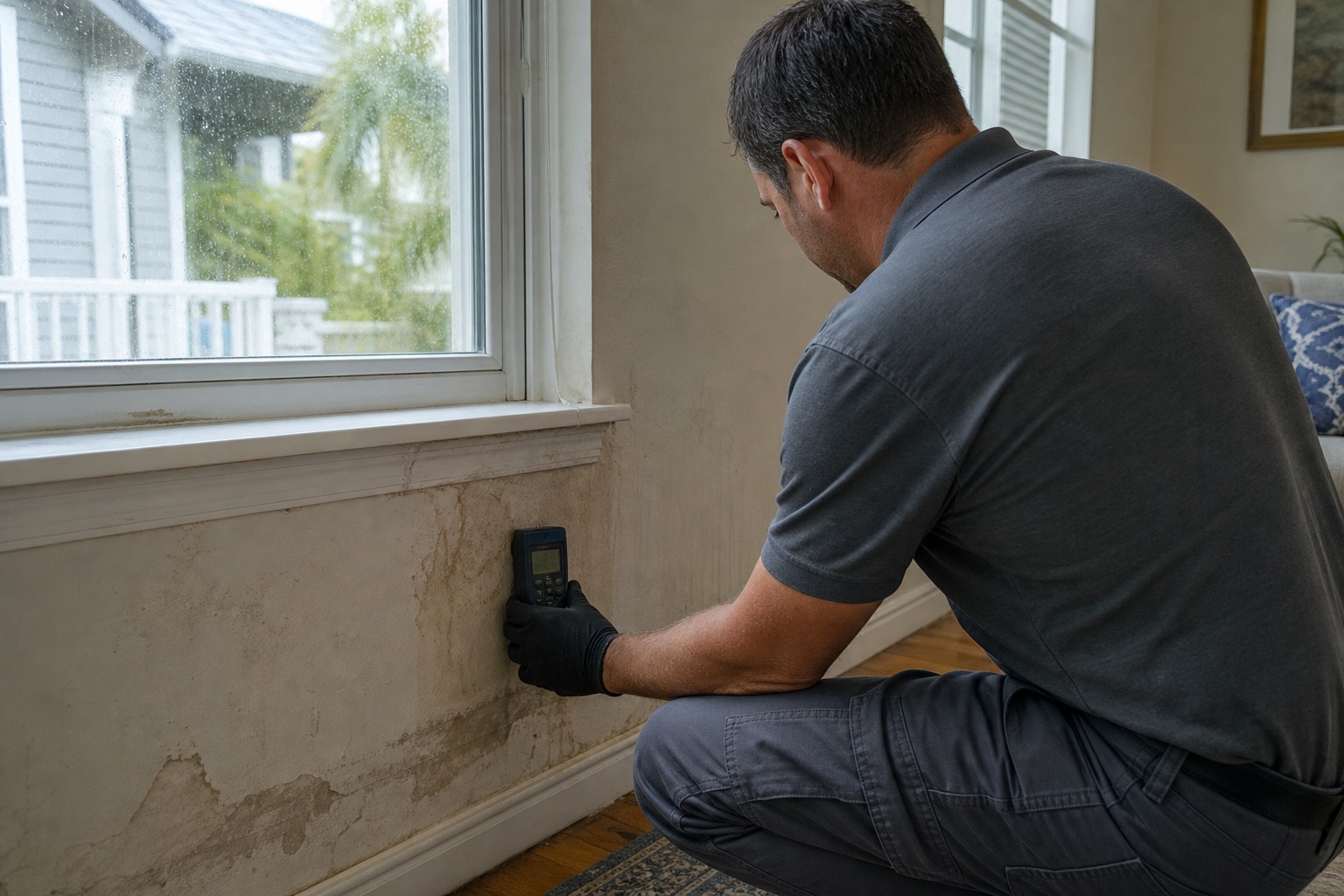
Check beneath flooring, behind baseboards, inside wall cavities, around cabinets, and in connected rooms for moisture that is easy to miss.
06
Emergency water removal
Extract standing water from accessible areas so it cannot keep soaking flooring, trim, drywall, and contents.
What is at stake
The water you cannot see can keep damaging the property.
The priority is to stop ongoing damage, remove standing water, locate moisture in connected materials, and dry the structure before avoidable swelling, staining, odor, or microbial growth gets worse.
Stop continued damage
Locate the source, remove accessible water, and protect belongings or materials that are still at risk.
Find the hidden moisture
Inspect the water path in flooring systems, walls, cabinets, ceilings, and adjoining rooms—not only the visible puddle.
Prove the area is ready
Use moisture monitoring to guide drying and material decisions before cleanup turns into repair work.
Insurance claim support
We work with property insurance claims by helping document the loss with photographs, condition or moisture information, and restoration scope details, and we can coordinate with your insurance adjuster when requested. Coverage, deductibles, and payment decisions remain subject to your policy and carrier.
Serving Charleston, SC
Property owners throughout Charleston, SC can call for help with assessment, cleanup, documentation, and a practical restoration plan based on the damage found at the property.
Share the likely source, when the water was noticed, whether it has stopped, and which rooms and materials appear affected.
Why does the moisture path matter?
Water can move under flooring, into wall materials, behind cabinets, and to rooms below. Understanding that path helps organize drying and material decisions.
Is water removal the same as complete restoration?
No. Water removal, moisture checks, drying, cleanup, material decisions, and repairs are related but distinct parts of the response.
What kinds of water damage are common in Charleston?
Calls may involve coastal rain, tropical weather, wind-driven water, and persistent humidity, along with pipe breaks, overflowing fixtures, and appliance failures. The source and affected materials determine which steps deserve attention.
What should I avoid doing after discovering water damage?
Avoid unsafe electrical areas, unstable ceilings, and contaminated water. Do not assume a dry surface means concealed materials are dry, and do not begin demolition without understanding safety and the moisture path.
Which parts of Charleston does this website serve?
The service is presented for property owners throughout Charleston, SC. Call with the property location and a description of the water problem to discuss the situation.
Do not settle for guesswork
Make one call and get the problem into focus.
The sooner you explain the source, timing, rooms, and materials, the sooner the next decisions can become clearer. Call Charleston Water Damage Restoration Service and start a property-specific conversation.